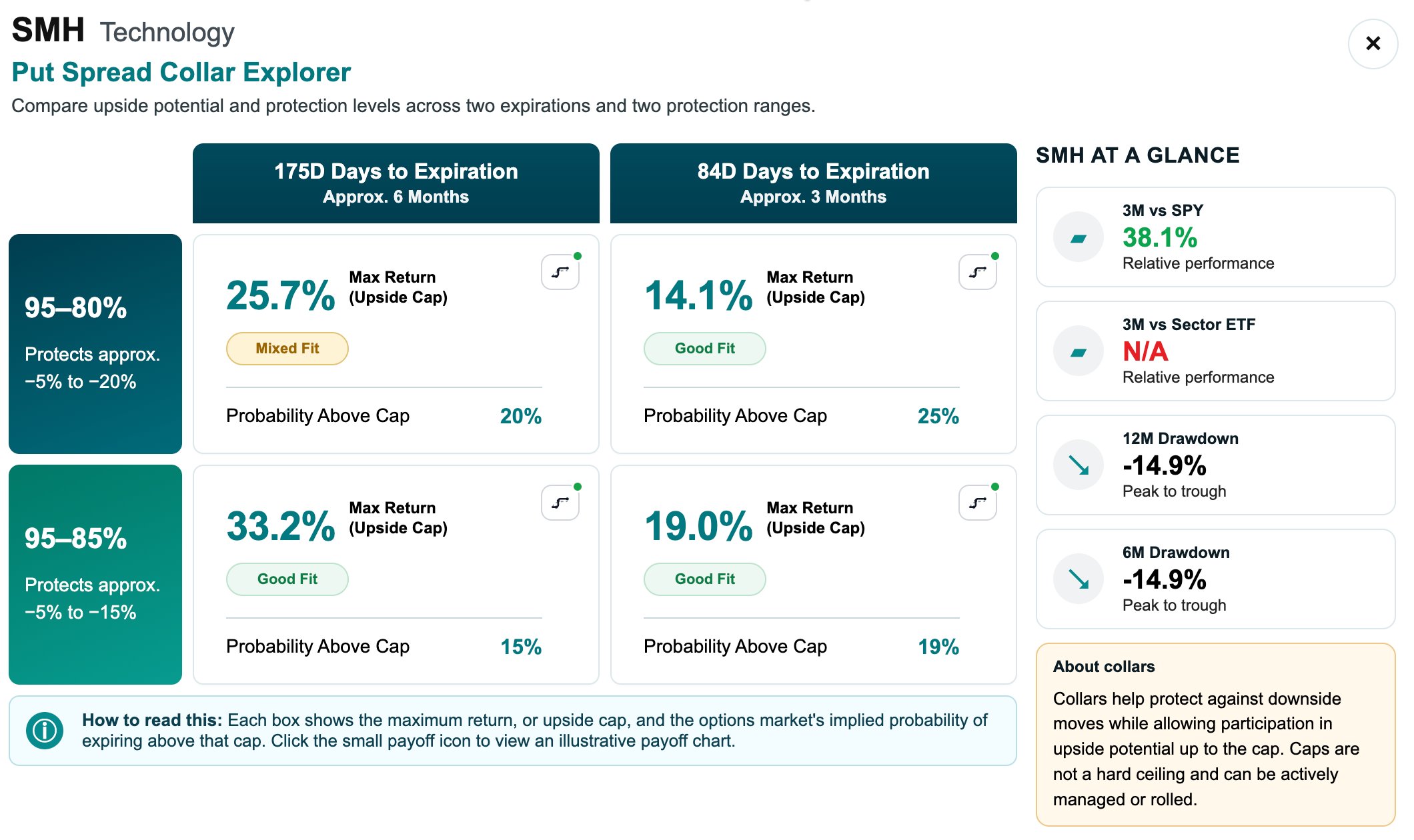
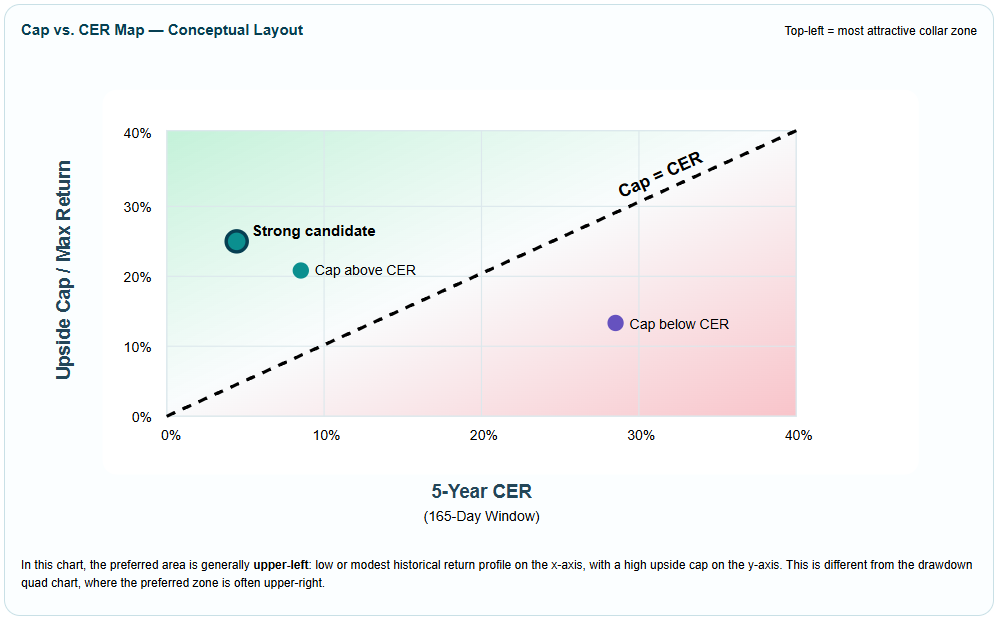
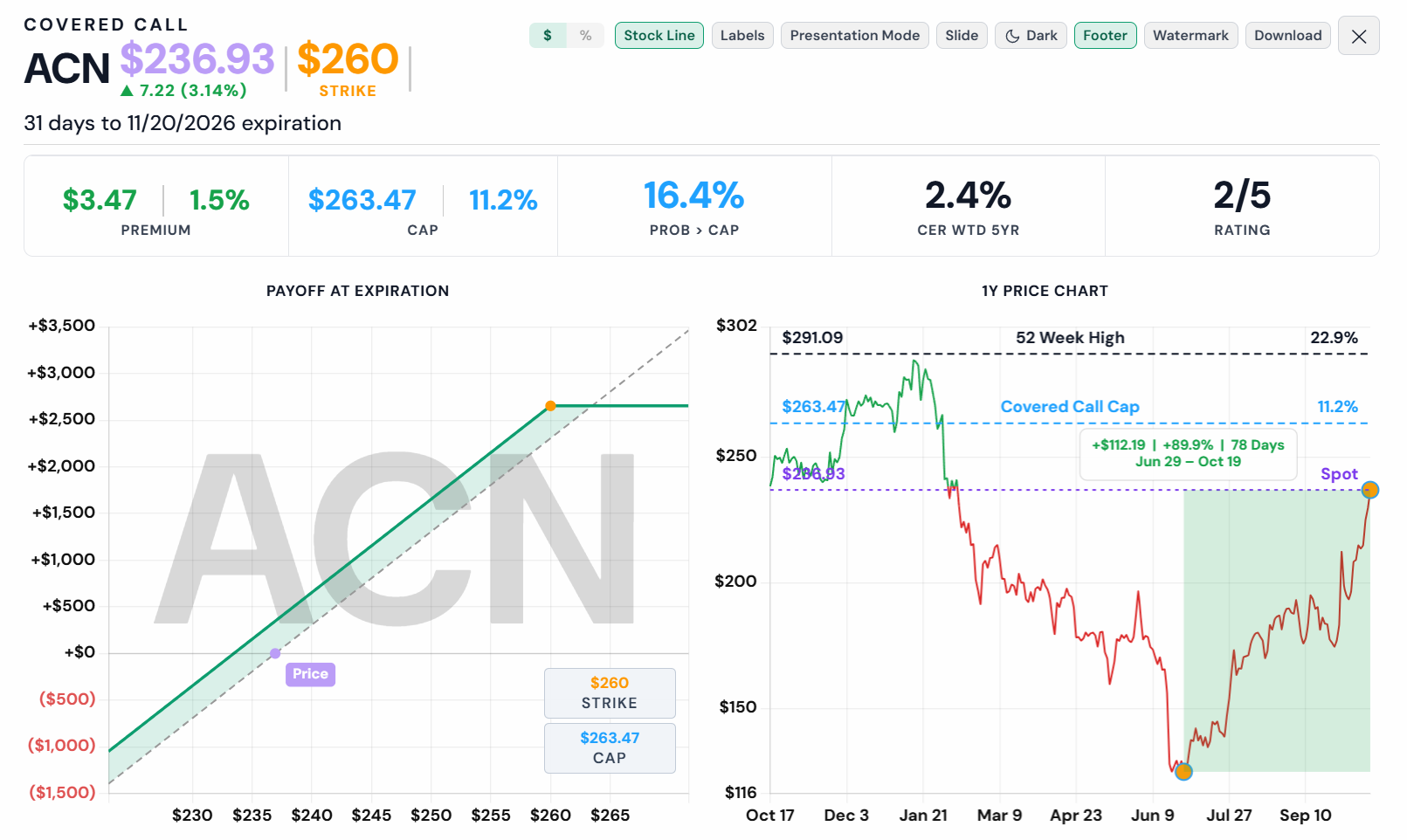
A Booster screen on the Volworks Core 20: the eight names still within 6% of their 52-week high, and what a zero-cost 1×2 call overlay would cap them at through March (Volworks treats this as a soft cap, as it can be adjusted. It can be raised with active management.)
In brief
- Thursday’s sell-off took SPY down 4.4% and QQQ down 6.5% in a day. Most people associate Booster trades with stocks that just got hit. We ran the opposite screen: stocks still sitting within 6% of their 52-week high.
- Of the Volworks Core 20, eight symbols were at 94% or more of their 52-week high. We ran all eight through our Booster report at the March 19, 2027 expiration (133 days).
- Two stand out on the numbers: Walmart (18.2% capped return, and the cap beat the stock in each of the last five years) and Microsoft (19.6% capped return, beat its 5-year CER in four of five years). J&J is a conditional third.
- A Booster is a 1×2 call overlay on shares you already own: buy one call near the money, sell two calls further out, typically for zero cost. Upside is accelerated up to a cap. Nothing here is a recommendation.
The setup
On Thursday, November 5, the market had one of its worst days of the year. SPY fell 4.4%, QQQ fell 6.5%, and the semiconductor and AI names led the way down: SMH lost 11.2%, AVGO 10.5%, TSLA 10.8%, NVDA 9.3%.
The instinct after a day like that is to look at what got hit and ask whether a Booster can help it catch up. That is the classic use of the trade, and it is a good one. But there is a second way to use a Booster that we think gets less attention than it deserves: on stocks that have not been hit, that are running well ahead of their own history, and where the return we would normally expect over the next few months looks modest.
If you own a stock near its 52-week high and you don’t expect it to keep running at the same pace, a Booster lets you keep the shares, keep the dividend, take no money out of pocket, and roughly double your return on the next leg up, in exchange for a cap you can move later.
The screen
We started with the Volworks Core 20: the largest, most heavily traded names in the market, a mix of mega-cap stocks and the most active ETFs, with SPY as the benchmark row.
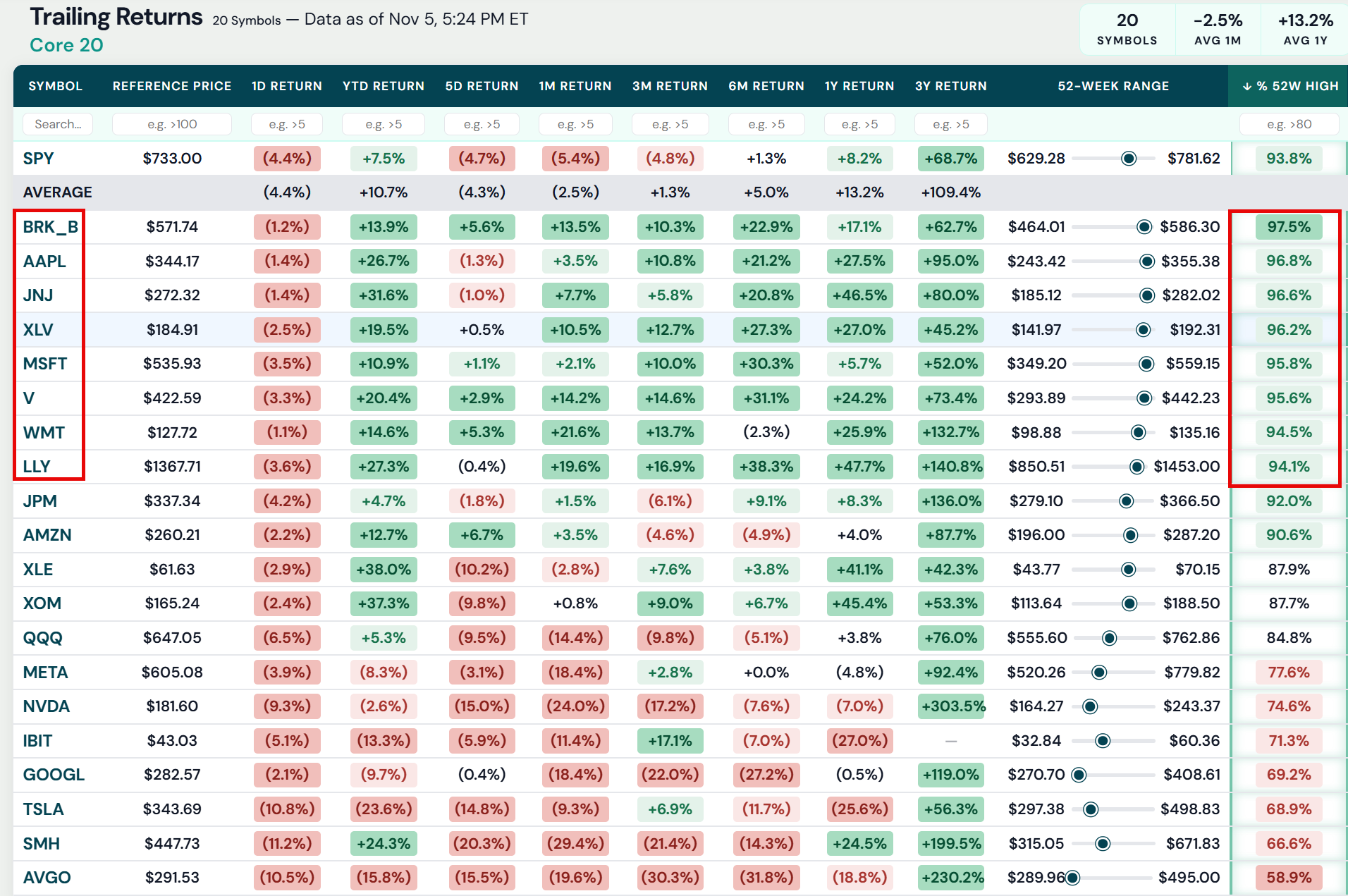
Sorting on % of 52-week high and filtering at 94% or better left eight symbols: BRK.B (97.5%), AAPL (96.8%), JNJ (96.6%), XLV (96.2%), MSFT (95.8%), V (95.6%), WMT (94.5%) and LLY (94.1%). JPM, at 92.0%, was the first name to miss the cut.
Note what is on that list and what isn’t. Not one of the AI or semiconductor leaders made it. The names still near their highs are healthcare, staples, financials and the two mega-caps that have behaved more like compounders than momentum stocks this year.
The Booster report
We then ran all eight through the Volworks Booster module at a single expiration, March 19, 2027, which was 133 days out on Thursday. We generally like 80 to 140 days for Boosters. A couple of these names didn’t have a liquid expiration at the shorter 103-day date, which would otherwise have been our preference, so we normalized all eight on March 19, 2027. Every trade falls inside our window, and using one expiration lets them be compared side by side on identical terms.
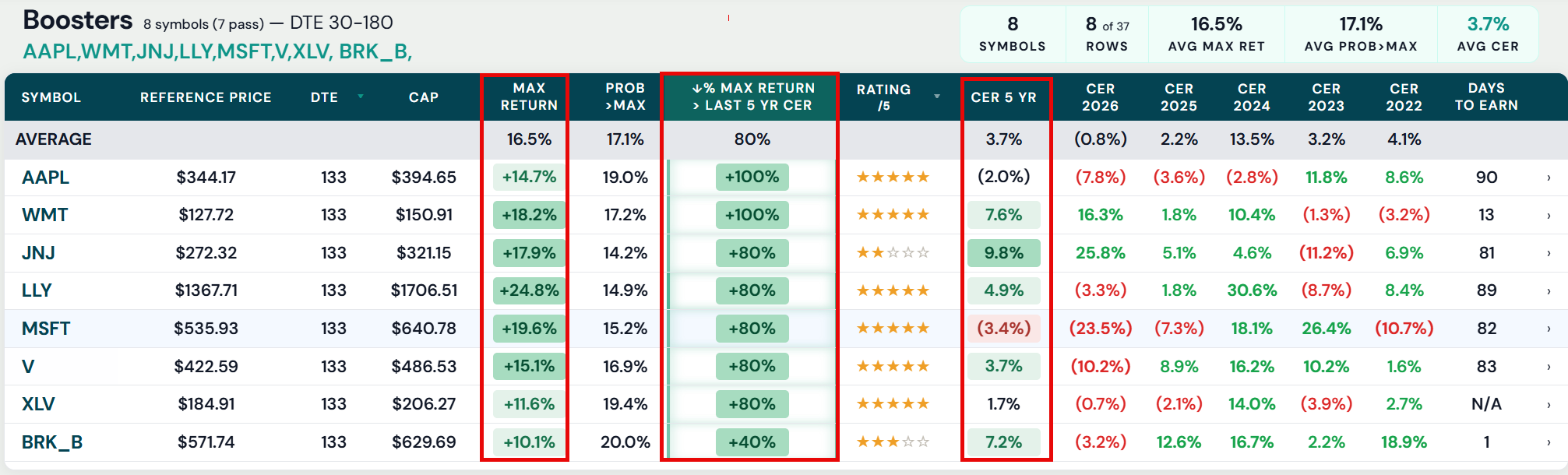
Three columns do the work:
- Max Return: the capped return on the shares if the stock finishes at or above the cap at expiration.
- % Max Return > Last 5 Yr CER: in how many of the last five years the stock’s actual return over this same 133-day window fell below today’s Booster cap. 100% means the cap would have beaten the stock in every one of the last five years.
- CER 5 Yr: the comparable-expiration return, a weighted average of those five years adjusted for recency.
Across the eight, the average Booster caps the return at 16.5% over 133 days, and the recency-weighted 5-year CER is 3.7%. That gap is the whole point of the screen.
The CER columns are, in effect, a seasonality read. They ask how each stock has actually behaved from early November through mid-March over the last five years, which is the window this Booster covers. A low or negative CER means the stock has tended to go sideways or down through this stretch. A stock near its 52-week high that is heading into a window like that is where a Booster earns its keep.
Where the numbers line up
Not all eight have weak seasonality ahead. BRK.B, for instance, has been positive in four of the last five years over this window, and its 40% beat rate says the cap would have cost you upside more often than not. The three below are the ones where the history supports the trade.
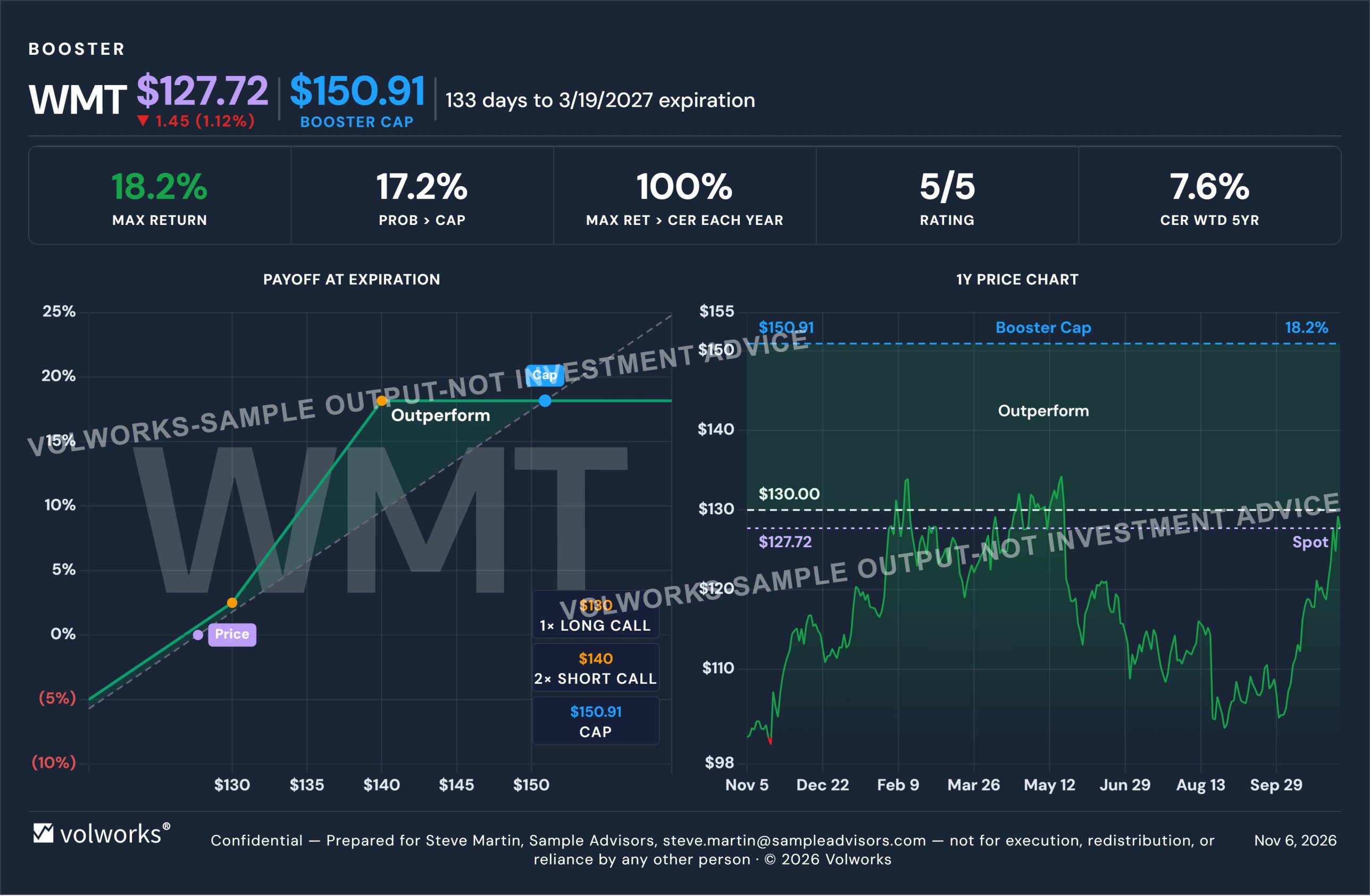
Walmart is the cleanest case on the page. The Booster caps the return at 18.2% (long one $130 call, short two $140 calls, cap at $150.91). In each of the last five years, WMT’s return over this window came in under 18.2%: the best was 16.3% in 2026, and two of the five were negative. The recency-weighted CER is 7.6%. A capped 18.2% against a 7.6% history, with the stock 5.5% off its high, is about as compelling a setup as this screen produces.
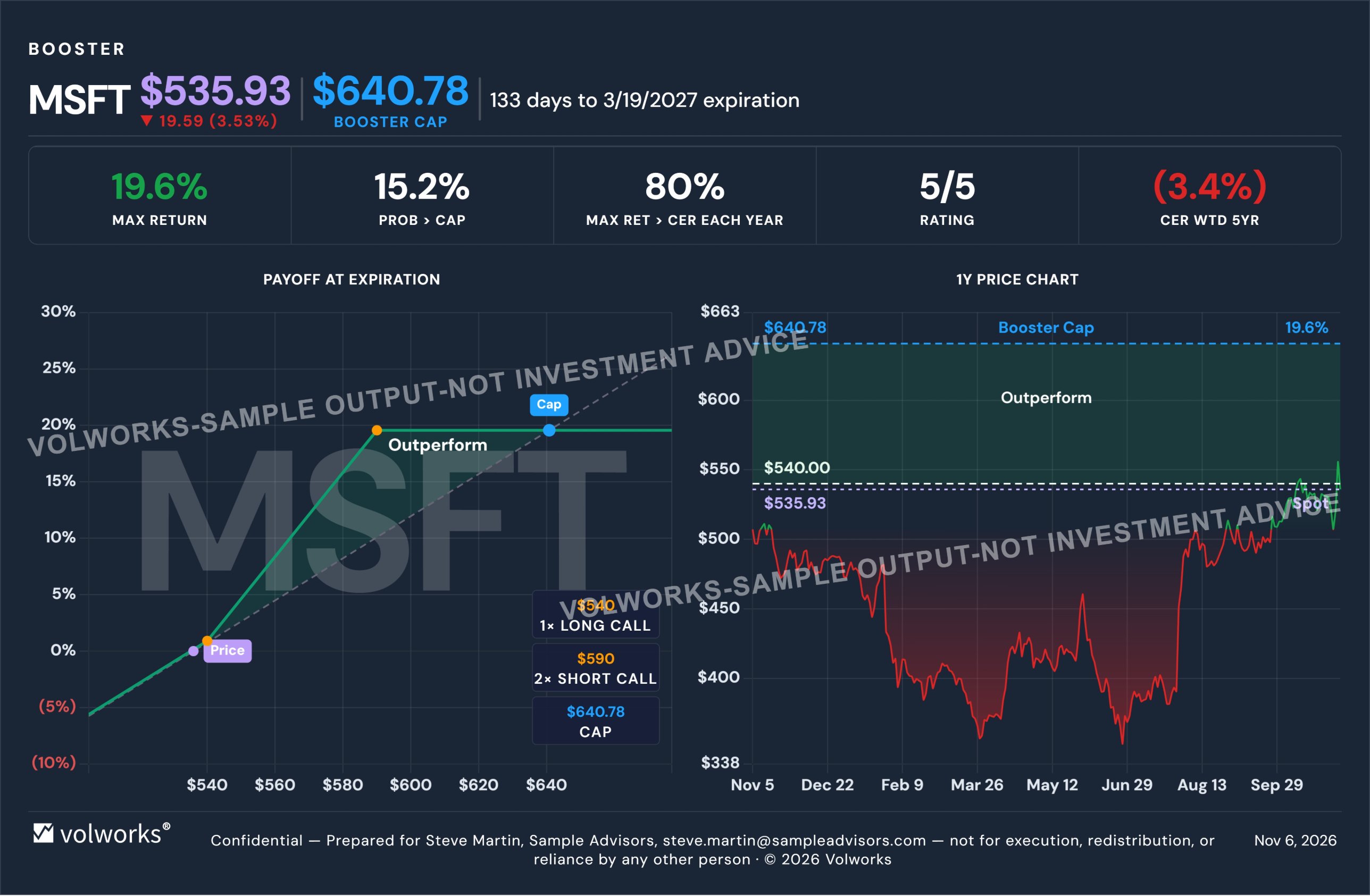
Microsoft is the one we chose as the hero image, because it makes the broader argument well. The Booster caps the return at 19.6% (long one $540 call, short two $590 calls, cap at $640.78). MSFT beat 19.6% in only one of the last five years over this window, 2023 at 26.4%, and its recency-weighted CER is actually negative at (3.4%), dragged down by 2026’s (23.5%). The question for a holder is simple: would roughly 20% over the next four-plus months be a return you would be happy to lock in on a stock sitting 4% below its all-time high? If yes, the Booster gets you there faster than the shares alone, with the understanding that if MSFT runs through the cap, the cap can be rolled up and out, much like rolling a covered call.
J&J is the conditional third. On the CER columns it looks as good as Walmart: 17.9% cap, an 80% beat rate, and a 9.8% recency-weighted CER. Our rating engine gave it two stars rather than five, and the reason is sitting in the 2026 column: a 25.8% return over this window, well above today’s cap. If you believe J&J can put up another year like that, it doesn’t belong on this list. If you think 2026 was the outlier, it does.
The takeaway
A Booster is not only a repair trade. Used on names that are near their highs, where the recent run looks better than the history supports, it converts a modest expected return into an accelerated one, at no cost, while you keep the shares.
None of this is a recommendation to buy, sell or overlay anything. Volworks is not an investment adviser, and we don’t tell anyone what to trade. What we can do is make the screen easy to run: it is one we run every day on our own portfolios, and one our clients run on our platform. After a day like Thursday, we thought it was worth showing.
A note on VERA™
Everything above took three steps on the Volworks platform: a trailing-returns screen, the Booster module and the payoff charts. For advisors and investors who would rather ask than click, our AI analyst VERA produced the same eight names and their Booster max returns from a single question. Ask her which of your holdings are within 6% of their highs and what a Booster would cap them at, and you get the same list.
Want to run this on your own holdings?
Volworks works with RIAs, family offices, institutional investors and self-directed investors. Learn more at volworks.com.
Disclosures: This material is provided for informational purposes only and does not constitute investment advice, a solicitation, or a recommendation to buy or sell any security. Options involve risk and are not suitable for all investors. Past performance is not indicative of future results. Data as of October 26, 2026, from the Volworks platform.
About the author: Victor Viner is Founder & CEO of Volworks. He co-founded Volaris Advisors and founded V2 Capital, both SEC-registered investment advisers, where he served as President and Chief Investment Officer. Volaris ran discretionary covered call programs for family office and institutional clients and was acquired by Credit Suisse; V2 Capital managed a hedge fund, a liquid alternatives mutual fund, and separately managed accounts. He has over 25 years of institutional derivatives experience.